







Most people picture the wrong thing. They imagine their car strapped to the top of a truck, doing 70 on the interstate for three days straight while rocks and grit and bug guts hammer the paint. That is the image that makes them ask about enclosed trailers before they ask about anything else.
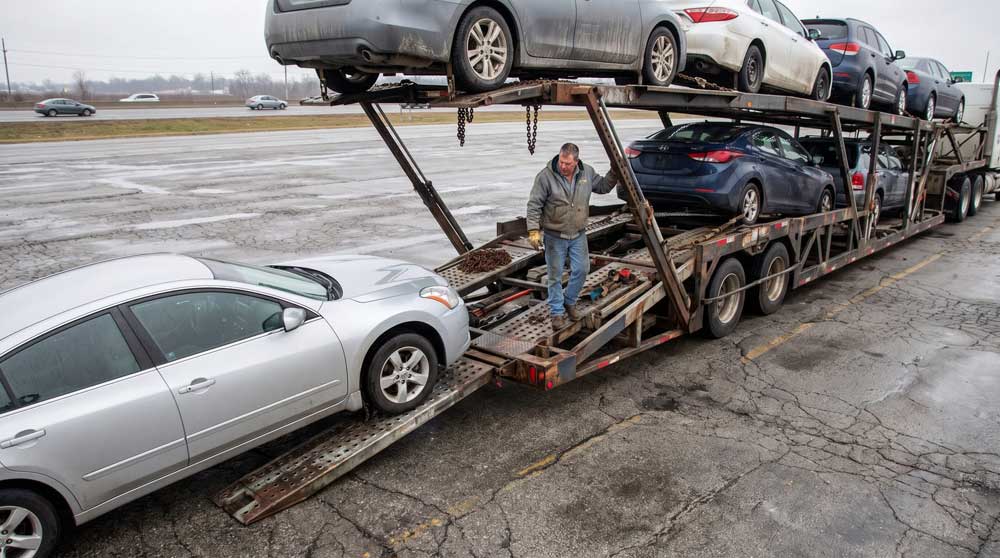
But the damage that actually shows up on claims mostly happens when the truck isnt moving at all. Around eighty percent of it occurs during loading and unloading, in the few minutes at each end when the car is being walked up a steel ramp at an angle it was never designed to sit at. Not on the highway. In a parking lot, going about two miles an hour.
That one fact changes almost everything about how you should be thinking about this.
The Real Risk Is a Ramp, Not a Rock
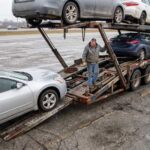
Watch a driver load a nine car rig sometime. He is putting a vehicle up a set of hydraulic ramps onto a deck that might be eight or nine feet in the air, with maybe four inches of clearance on either side of the mirrors, usually while standing on the frame rail looking down through a gap.
The angle where the ramp meets the deck is the pinch point. Low front bumpers scrape there. Side skirts catch. A car that sits an inch lower than the driver expected will kiss the ramp lip on the way up and leave a mark nobody notices until delivery.
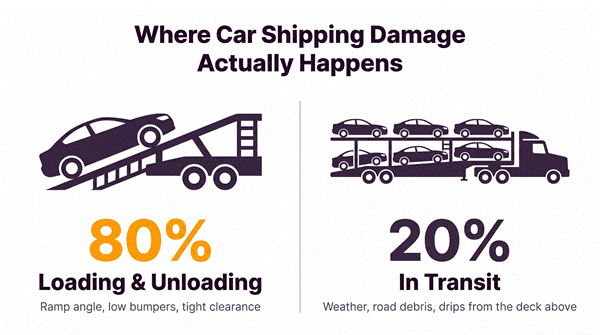
Good drivers handle this with wood blocks, extra ramp sections, and by walking the car up themselves instead of letting somebody else do it. Bad ones rush. The difference between those two outcomes has nothing to do with whether there is a roof over the trailer.
Highway exposure on open car transport is real but it is far less dramatic than people assume. Your car sits up there in the same weather it would sit parked at a curb, and it covers the same road you would have covered driving it yourself, except it isn’t racking up two thousand miles of engine hours and tire wear while doing it. The exposure trade is genuinely in your favor. A wash on the other end handles most of it.
Nobody Gets to Pick the Top Spot
People ask for the top deck all the time. Sometimes they offer to pay more for it. It doesn’t work that way, and understanding why tells you a lot about how the whole business runs.
Loading order is a math problem the driver solves before he touches a single car. Heavy vehicles go low and toward the center for weight distribution, because the whole rig still has to come in under axle limits at the scale house. Then he has to think about drop order. If your car is coming off third out of nine, it cannot be buried behind six other vehicles on a deck that has to be lowered hydraulically to get anything out. So the truck gets packed like a puzzle where the pieces come out in a specific sequence across four states.
Your spot is whatever falls out of that puzzle. There is one practical consequence worth knowing: a car on a lower deck can catch drips from the vehicle above it. Older vehicles leak. Power steering fluid, a little oil, condensation off an air conditioner. It happens, it is almost always cosmetic, and it comes off with a wash. But if your car is spotless and you are anxious about it, that is the actual reason to care about deck position, not wind.
The Quote Is a Bid, Not a Price
This is the part that confuses people most, and it is the source of nearly every bad experience in this industry.
When you book with a broker, you aren’t buying a trip. You are authorizing them to post your vehicle to a load board where thousands of owner operators are looking at available freight and deciding what is worth their time. The number attached to your car is an offer. If it is competitive for that lane on that week, a driver takes it in a few hours. If it is low, your car sits on the board while trucks fill up with better paying loads around it.
A driver running a route from Dallas to Phoenix is trying to fill nine or ten slots with vehicles that all move in roughly the same direction and pay enough to cover fuel, insurance, his own time, and the deadhead miles at the end. He is not going to take a car that pays three hundred dollars under market just because somebody booked it two weeks ago. He will take the one that pays the market. Yours waits.
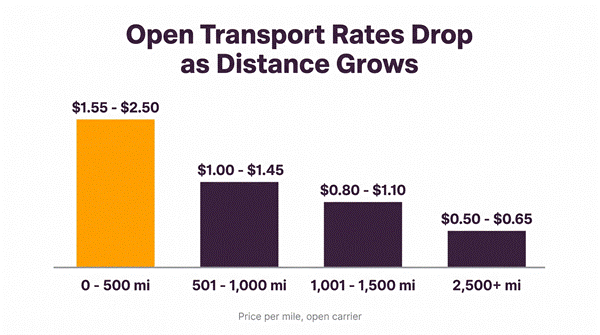
Rates settle out around a dollar fifty to two dollars fifty a mile on short runs under five hundred miles, and drop toward fifty or sixty five cents a mile once you are past twenty five hundred miles, because the long haul spreads the fixed costs out. Average out door to door coast to coast and most people land somewhere around twelve hundred dollars, with a real range of six hundred to twenty five hundred depending on route, season, and what you are shipping. January and midsummer run hot. Late fall is usually the cheapest window of the year.
So when a quote comes in two hundred dollars under everyone else, that is not a better deal. That is a number that hasn’t been tested against the load board yet.
The Truck Physically Cannot Reach Your House
Door to door is the industry term and it is slightly misleading. What you are actually buying with door to door auto transport is delivery as close to your door as an eighty foot vehicle can legally and safely get.
A loaded car hauler is roughly seventy five to eighty feet long, thirteen and a half feet tall, and weighs somewhere north of seventy thousand pounds. It does not fit down a residential street with cars parked on both sides. It cannot turn into a cul de sac. It will bottom out on a steep driveway apron and it will take down a low branch without slowing. Drivers know all of this, which is why an experienced one will call you an hour out and ask you to meet him at a shopping center or a wide stretch of road nearby.
That isn’t the company cutting corners. That is a driver avoiding a situation where he tears a mirror off your neighbor’s truck backing out of a street he never should have entered. If you live somewhere tight, say so when you book.. It changes nothing about the price and it saves everybody an hour of frustration on pickup day.
When Enclosed Is Worth Fifty Percent More, and When It Isn’t
Enclosed transport typically runs about fifty percent above open rates. On a coast to coast move that is five or six hundred extra dollars.
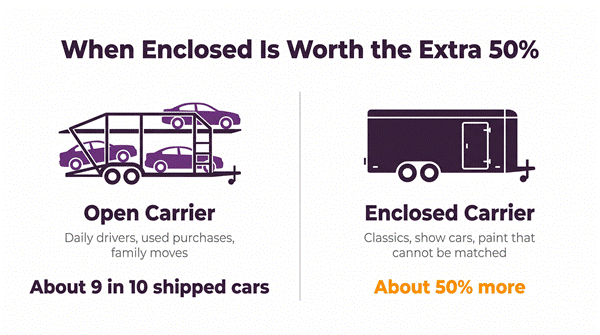
Worth it for a car where paint depth matters to the value. A restored classic, something with a factory finish that can’t be color matched, a vehicle where a rock chip is an actual financial event. Not worth it for the car most people are actually shipping. The average vehicle on American roads is now 12.8 years old, and cars specifically average over fourteen. Spending six hundred dollars to shield a well used commuter from weather it has been sitting in for a decade is not a great use of six hundred dollars.
The honest version is that open transport is what roughly nine out of ten shipped vehicles ride on, including the ones dealers move between lots and the ones manufacturers send to showrooms brand new. Most of the cars moving around this country on a trailer right now are riding on an open deck. Not because it is cheap, though it is. Because it works.
The Paperwork Is the Only Thing Protecting You
Carriers carry motor truck cargo insurance, commonly around a hundred thousand dollars of coverage, which is what actually pays if something goes wrong. But that coverage is useless to you without the bill of lading.
At pickup, the driver walks the car and marks every existing scratch, ding, and chip on a condition diagram. That document is your baseline. Take your own photos at the same time, all four corners, the roof, the wheels, close ups of anything already damaged, with the timestamp on. Do it in daylight.
At delivery, inspect before you sign. Not a glance.. an actual walk around in decent light, compared against the pickup diagram. If there is new damage, write it on the bill of lading before your name goes anywhere near it. Once you sign a clean document you have confirmed in writing that the car arrived fine, and a claim after that point is close to unwinnable no matter what your photos show.
Also, empty the car. Personal items are not covered under cargo insurance, and a trunk full of boxes adds weight the driver has to account for at the scale.
Ship your car in the last week of a month if you have any flexibility at all. Drivers who are short a load to finish out their month will take a rate they would have turned down on the ninth.
About the author
Dimitar works on the operations side of Rivalane Auto Transport, a US vehicle shipping company that moves cars, trucks and SUVs door to door on open and enclosed carriers. He spends most of his week around dispatchers, load boards and drivers, which is where everything in this article came from.